
What Happened
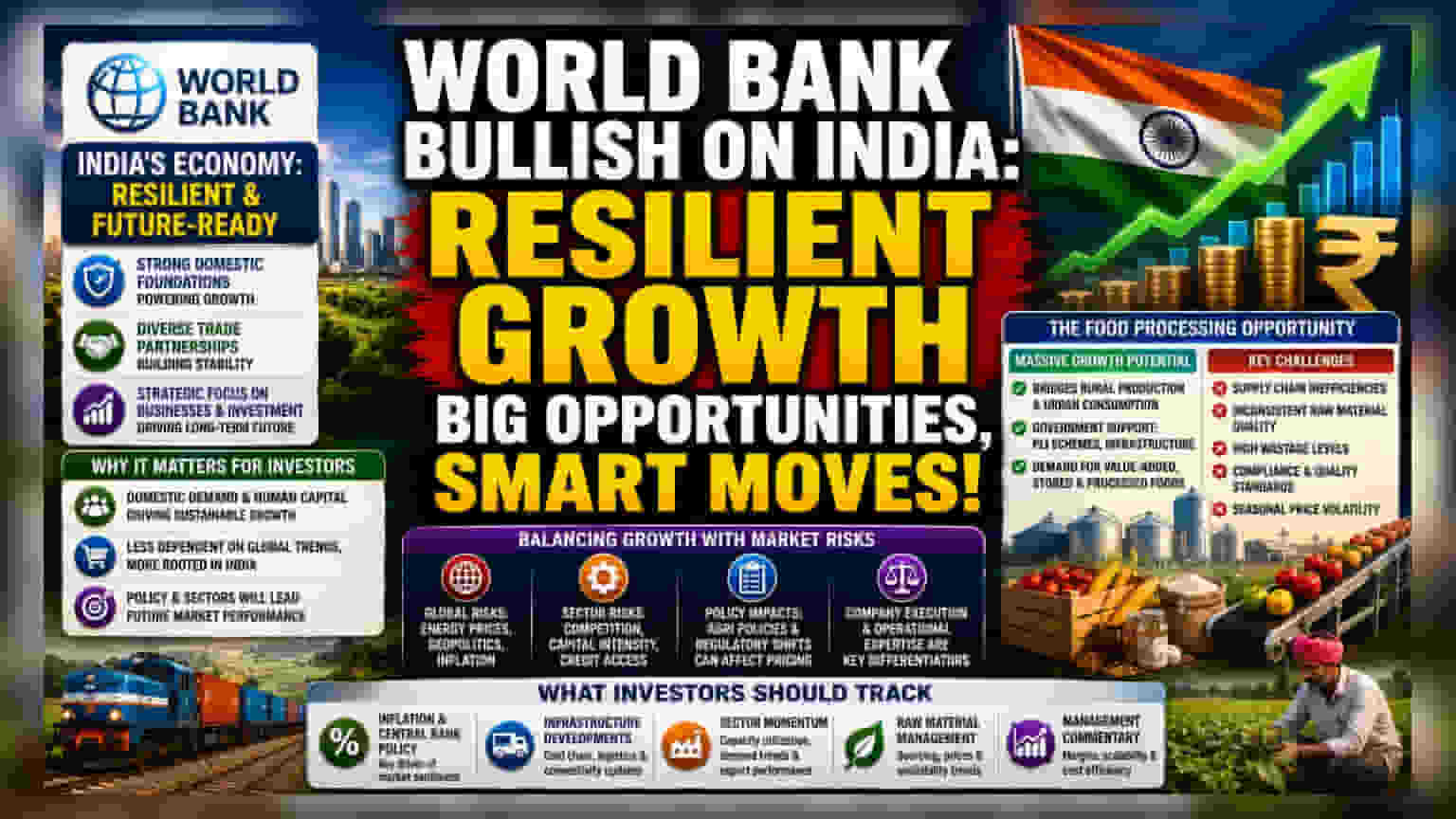
The World Bank has shared an optimistic assessment of India's economic resilience, suggesting that the nation is well-positioned to maintain steady growth despite global pressures. Amidst a backdrop of geopolitical tensions and trade disruptions that are affecting many economies, the World Bank noted that India’s strong domestic foundations and growing trade partnerships are acting as important buffers. The organization underscored the country's strategic focus on building robust businesses and attracting both local and foreign investment as a primary driver for its positive long-term outlook.
Why This Matters For Investors
For Indian investors, this assessment highlights a shift in market drivers. While external shocks often impact equity markets, the World Bank's focus on domestic demand and human capital suggests that the country's growth is increasingly rooted in internal consumption and productive investment rather than just global tailwinds. This is critical for long-term investors, as it implies that domestic policies and sector-specific developments may play a bigger role in future performance than global trends alone.
The Food Processing Angle
One of the most specific opportunities highlighted is the food processing sector. The World Bank views this industry as a massive growth area, with the potential to bridge the gap between rural production and urban consumption. Currently, while India is a top producer of various agricultural goods, the level of processing remains low compared to global standards.
For investors, this presents a dual-sided scenario. On the positive side, companies involved in food storage, value-added processing, and logistics are likely to benefit from government-backed incentives like the Production Linked Incentive (PLI) schemes and improved infrastructure projects. On the other hand, the sector faces significant hurdles. These include supply chain inefficiencies, inconsistent raw material quality, and high wastage levels. Successfully scaling businesses in this space requires deep operational expertise to manage seasonal price fluctuations and strict compliance with international quality standards.
Balancing Growth With Market Risks
While the overall economic picture appears stable, investors should distinguish between the country's macroeconomic resilience and the operational risks faced by individual companies. Even with strong projected growth, the economy remains sensitive to global variables such as energy prices and international conflicts, which can impact inflation and consumer spending.
Furthermore, while the food processing sector is a promising area, it is not immune to competitive pressure or the challenges of capital-intensive expansion. Access to credit for smaller players in the sector remains a monitorable, and any regulatory shifts in agricultural policy can create sudden ripples in pricing or business models. Investors should evaluate companies not just on the potential of the sector, but on their ability to navigate these operational complexities.
What Investors Should Track
Looking ahead, market participants may keep an eye on several key indicators. First, inflation trends and central bank policy remain the most significant factors for immediate market sentiment. Second, within the food processing and manufacturing space, investors may watch for updates on infrastructure commissioning, such as cold chain developments and logistics connectivity, as these will dictate the actual efficiency and profitability of these businesses. Finally, management commentary on raw material sourcing and capacity utilization will provide clearer insight into whether companies can effectively turn these broad economic opportunities into consistent profit margins.