

Avanish Mishra, Assistant Professor at Harvard Medical School – Massachusetts General Hospital, shared a post on LinkedIn:
”Excited to share our recent publication in PNAS on circulating tumor cells and resistance to antibody-drug conjugates (ADCs) in metastatic breast cancer.
ADCs are transforming cancer treatment by targeting surface proteins on cancer cells and delivering potent drug payloads. In metastatic breast cancer, TROP2- and HER2-targeting ADCs have shown major clinical activity, with many additional ADCs now advancing through development.
A key question is what happens when patients initially respond and then develop resistance.
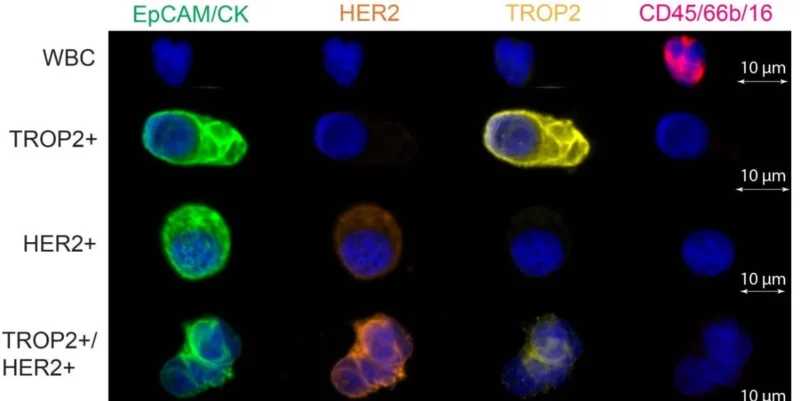
Using longitudinal TROP2 and HER2 protein analysis on CTCs from a prospective cohort of 35 patients, we found that these target epitopes are not commonly downregulated at the time of acquired clinical resistance. This challenges the assumption that resistance to ADCs is primarily driven by loss of the targeted surface marker.
We also found that patients progressing after an initial response to either a TROP2- or HER2-targeting ADC often had poor outcomes when treated with a second-line ADC targeting the alternate epitope. Median duration of therapy was 226 days for the initial ADC compared with 48 days for subsequent ADC therapy.
Together, these findings suggest that for many current breast cancer ADCs, the payload may be a more important determinant of resistance than the target epitope itself. Since many ADCs use chemically related TOP1 inhibitor payloads, including deruxtecan and SN-38, our work highlights the need to develop ADCs with non-cross-resistant payloads.
This study also underscores the value of CTCs as a real-time liquid biopsy platform for monitoring target expression, tracking therapeutic response, and uncovering mechanisms of resistance.
Grateful to all patients, clinicians, and co-authors who made this work possible. This concludes the last of my work from the instructor phase at MGH and HMS. A special shout-out to Quinn Cunneely, a research technician in the lab, who led this study across the board as a co-first author.”
Other Articles about breast cancer on OncoDaily.